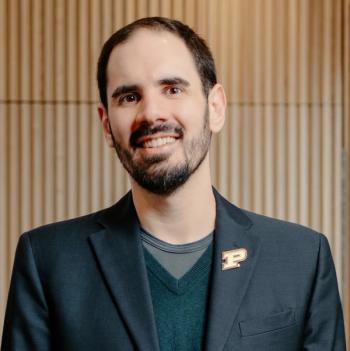
Dr. Lenka Halámková, an assistant professor of high-dimensional data analysis at Texas Tech University, presented her team’s most recent research at Pittcon 2026, which took place in San Antonio, Texas, from March 7–11th, 2026. Her talk, which was titled, “Multi-Modal Spectroscopic and Biochemical Approaches for Fentanyl Detection: Integrating Raman, ATR-FTIR, and Enzyme Kinetics Analysis,” delved into the spectroscopic techniques, such as Raman spectroscopy and attenuated total reflectance Fourier transform infrared (ATR-FTIR), that her team used to detect fentanyl.1
Her team’s recent work highlights the core mission of her laboratory. By using machine learning and multivariate statistical methods to interpret vibrational spectroscopic data for forensic and biomedical applications, her group aims to develop new analytical methods that can classify and detect forensic trace evidence.2
The first part of our conversation with Halámková provided an overview of her talk at Pittcon. The second part of our interview covered the utility of ATR-FTIR spectroscopy in her team’s work and how it was able to capture chemical signatures of fentanyl within the nail’s keratin matrix.
In the third part of our conversation with Halámková, she discusses the analysis of FT-IR spectrum data, emphasizing the use of the entire spectrum for data points. Machine learning (ML) algorithms, specifically partial least squares discriminant analysis (PLS-DA) and support vector machine discriminant analysis (SVM-DA), were chosen for her team’s data-driven approach. The models were trained on split data, with some donors reserved for external validation. PLS-DA achieved an accuracy of 85%, while SVM-DA reached 81% accuracy on single spectra. Notably, all donors in the external validation set were correctly classified.